
How to Update Website Content Properly
July 4, 2026
How to Choose the Best Website Support Plans
July 8, 2026
Your website usually goes quiet long before it actually breaks. A team page still shows someone who left last year. Opening hours change but the old times stay live. A plugin update gets ignored because nobody wants to touch the site and risk a problem. That is usually how small businesses realise they need to know how to keep website updated – not as a marketing exercise, but as basic business housekeeping.
If your website brings in enquiries, takes bookings or simply reassures people that your company is active and trustworthy, keeping it current is not optional. It does not need constant redesigns or weekly reinvention. It needs steady attention, sensible priorities and someone taking responsibility for what changes, when, and why.
Why keeping your website updated matters
An outdated website does more than look neglected. It can cost you enquiries, damage trust and create technical issues that are harder and more expensive to fix later.
For small businesses, the commercial risk is usually simple. A visitor lands on your site, sees old information, and starts to wonder what else might be wrong. If your prices are out of date, your forms do not work properly or your site loads poorly on mobile, people often leave without saying a word. You do not always get a second chance.
There is also the less visible side. Websites rely on software, hosting environments, themes, plugins, forms and security layers that all need periodic care. Leave them too long and small maintenance jobs can turn into downtime, compatibility problems or security weaknesses. That is why learning how to keep website updated is partly about content, and partly about protection.
How to keep website updated in a way that is manageable
Most business owners do not fail because they do not care. They fail because website upkeep sits in the gap between urgent and important. It rarely shouts until something has gone wrong.
The fix is not to create an elaborate digital strategy. It is to make website maintenance routine and realistic. A website that is reviewed monthly and properly maintained through the year will usually outperform a website that gets one big burst of attention every 18 months.
Start by splitting updates into three groups: content, technical maintenance and commercial checks. That helps you avoid the common mistake of only touching the homepage while everything underneath quietly ages.
Keep core business information current
Your contact details, service descriptions, opening hours, location information and team details should be treated as live business assets. If any of them change, your website should change too. This sounds obvious, but many businesses leave inaccurate information online for months because updating the site feels like a separate job.
It helps to decide who owns that responsibility. If nobody is clearly accountable, updates drift. Even in a small company, one person should be responsible for flagging website changes and making sure they are carried out.
This is especially important if you run seasonal offers, changing service areas or time-sensitive promotions. Old offers can create awkward customer conversations. Old service information can lead to wasted enquiries. Accuracy matters because it saves time as much as it builds trust.
Review your content on a schedule
Not every page needs weekly attention, but every important page should have a review cycle. For many small firms, a monthly check is enough for the homepage, contact page, key services and any lead generation forms. A quarterly review may be enough for evergreen pages such as about pages or standard informational content.
The point is not to rewrite everything. The point is to ask straightforward questions. Is this still correct? Does this still reflect what we sell? Is there anything here that now looks out of date? Are customers still taking the path through the site that we want them to take?
A short scheduled review catches more than most people expect. You notice old testimonials, expired notices, pages with weak calls to action and images that no longer match the business. Those details shape confidence.
Do not ignore software updates
This is where many websites become vulnerable. If your site runs on a content management system, plugins, themes or e-commerce tools, updates are part of owning the website. They are not optional extras.
That said, updating everything blindly can also cause problems. Sometimes a plugin update conflicts with another tool. Sometimes a theme update affects layout or functionality. The right approach is controlled maintenance, ideally with backups in place and someone checking that the website still works afterwards.
For a small business owner, this is usually the point where DIY starts to become inefficient. If you are not comfortable managing updates, testing forms, checking checkout functions or restoring backups, the low-cost option can quickly become the costly one.
What should be checked every month
A monthly website check does not need to be complicated, but it should be consistent. Focus on the pages and functions that affect trust, visibility and enquiries.
Check that your contact form works. Confirm phone numbers and email addresses are correct. Look at the site on mobile as well as desktop. Test your main calls to action. Review recent content for accuracy. Make sure plugins, themes and platform software are current. If you take payments or bookings, complete a test journey where practical.
Also look for quieter warning signs. Slower loading times, broken images, odd formatting and missing notifications often point to underlying issues. Left alone, they tend to get worse rather than sort themselves out.
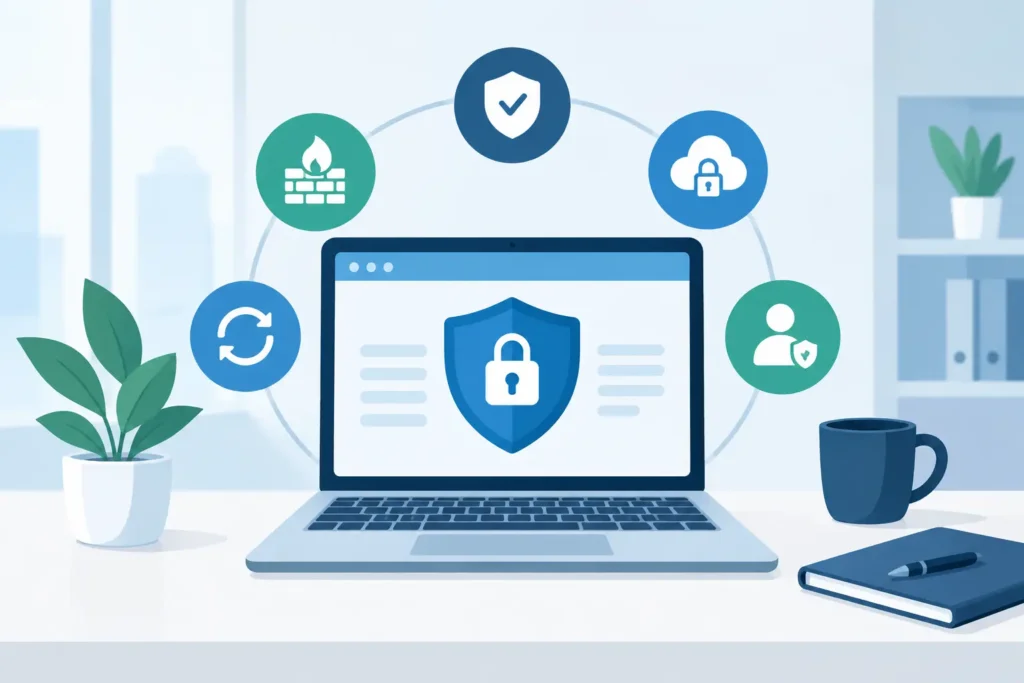
Security and backups are part of staying updated
Many businesses think of updates as a content task, but security maintenance sits right alongside it. A website can look current on the surface and still be exposed underneath.
Strong passwords, monitored software updates, malware checks and reliable backups all matter. Backups deserve special attention because they are what turns a stressful website problem into a manageable one. If something breaks after an update, or if the site is compromised, a recent backup can save hours or days of disruption.
The trade-off here is simple. You can spend a bit of time and money preventing issues, or much more time and money recovering from them. For most small companies, prevention is the better commercial decision.
When to do it yourself and when to hand it over
There is no rule that says every business must outsource website maintenance. If your site is simple, rarely changes and you have someone in-house who is confident managing content and technical checks, keeping it internal may be perfectly fine.
But it depends on the type of site, how critical it is to the business and how reliable your internal process really is. A brochure site with a few service pages is one thing. A website that takes orders, manages customer enquiries daily or supports paid marketing campaigns is another.
The real question is not whether you can update it yourself. It is whether it gets done properly and on time. Many businesses technically can do it themselves, but in practice it sits on a to-do list until a form fails, a page goes missing or a customer points out something embarrassing.
That is why ongoing support works well for time-poor companies. Instead of trying to remember every update, test every plugin and chase every small amendment, you have continuity. Someone is keeping an eye on the website as part of an ongoing service rather than waiting for a crisis.
For businesses that want a straightforward solution, that kind of support is often more affordable than people expect. A service such as My Website Needs Help is built around exactly that need – keeping small business websites working, updated and protected without turning it into another job for the owner.
A simple plan to keep your website current
If you want a practical routine, keep it lean. Review core pages monthly. Check forms and key user journeys. Apply software updates carefully and with backups. Refresh content when your business changes, not six months later. Review performance and security through the year, not only after a problem.
If you have several people feeding information into the website, keep one master list of approved service descriptions, contact details, pricing references and brand assets. That reduces inconsistency and makes updates quicker. Small operational habits make a big difference over time.
Most importantly, treat website upkeep as part of running the business, not as a side project. Your website is often the first place people assess whether you are active, credible and easy to deal with. If it looks neglected, that impression spreads quickly.
A well-maintained site does not need to be flashy. It needs to be accurate, secure and dependable. For most small businesses, that is what customers actually want. Keep it current, keep it working, and it will keep doing its job while you get on with yours.