
Website Maintenance London Businesses Can Rely On
September 16, 2026
How to Diagnose a Slow Website Before Sales Suffer
September 20, 2026
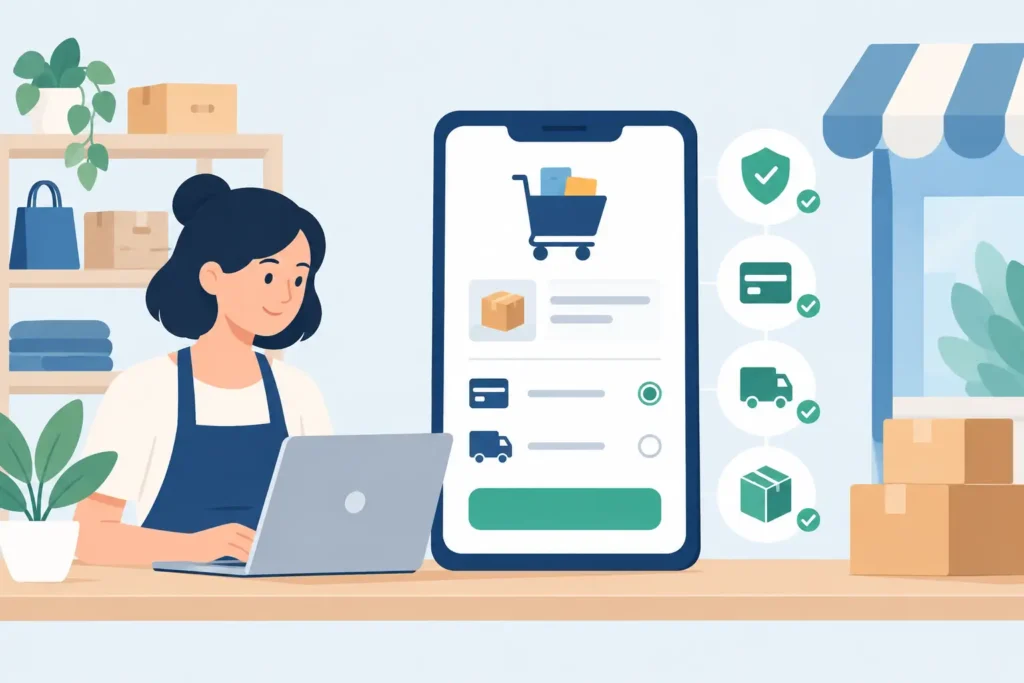
A checkout page is where a visitor stops browsing and decides whether to trust your business with their money. If it looks unreliable, fails at the wrong moment or asks for more information than it should, you can lose the sale and damage confidence. Knowing how to secure online checkout is therefore not just a technical job. It is part of keeping your business trading.
For a small business, the aim is simple: take payment through a trusted process, protect customer information and make sure the website stays properly maintained. You do not need to become a security specialist, but you do need to know what should be in place and who is responsible for it.
Start with a trusted payment provider
The safest approach is usually to let an established payment provider handle card details rather than trying to collect or store them on your own website. Providers such as Stripe, PayPal, Worldpay and Square have systems designed to process payments securely and meet the required card industry standards.
Depending on the setup, your customer may be sent to the provider’s secure payment page or complete payment in a protected checkout window on your site. Either route can work well. The key point is that your website should not store full card numbers, security codes or other sensitive payment data.
This reduces your risk considerably. It also means that if a customer asks how their card details are protected, you can give a clear answer: payments are processed by a recognised provider, not held in your website database.
There is a trade-off. Some off-site payment pages can feel less branded, while a tightly integrated checkout may look more consistent. For most small businesses, security and reliability should come before a perfectly customised payment screen.
Keep HTTPS working on every checkout page
Your whole website should use HTTPS, but there is no room for exceptions around checkout, account and contact forms. HTTPS encrypts data travelling between the customer’s browser and your website. Without it, browsers may warn visitors that your site is not secure – a warning that can stop a purchase immediately.
Check that your SSL certificate is valid, renewed and correctly installed. A certificate can expire without anyone noticing until visitors begin receiving browser warnings. Redirecting every HTTP version of the site to HTTPS also matters, as does checking that images, scripts and checkout tools are loaded securely.
A padlock symbol alone is not proof that every part of your checkout is safe. It only shows that the connection is encrypted. Your payment provider, plugins, theme and website administration still need looking after.
Test the journey as a customer would
Make a test purchase after major website changes, plugin updates or payment-provider changes. Check the basket, delivery options, discount codes, payment button, confirmation page and order emails.
This is about more than spotting a broken button. A checkout that repeatedly errors, redirects to an unfamiliar page or produces no confirmation can make customers worry that payment has been taken without an order being placed. Test with a mobile phone too. Many customers will buy from their phone, and small display or form issues can become costly at checkout.
Update the software behind your shop
Out-of-date website software is one of the most common ways attackers gain access to smaller sites. This includes the content management system, e-commerce platform, plugins, extensions, themes and server software. Security updates often fix known weaknesses, which means delaying them gives criminals more time to exploit them.
Updates should be applied carefully, not blindly. A plugin update might conflict with a theme or affect checkout functionality, particularly on an older site with several add-ons. That is why a proper maintenance process includes a backup before work begins, updates in a sensible order and checks afterwards.
Remove anything you do not use. An inactive plugin is still software that may contain a weakness, and an old theme can cause the same problem. Fewer moving parts usually mean fewer things to maintain.
If you rely on an agency or support provider, ask a direct question: who checks and updates the software that handles my checkout, and how often? A clear answer is more useful than vague assurances that the site is ‘looked after’.
Protect access to the website administration area
A secure checkout can be undermined if someone gets into your website’s admin area. Once inside, an attacker may change bank details, add malicious scripts, create fake discount offers or interfere with customer orders.
Use a different, strong password for every website-related account, including hosting, domain registration, payment provider and website administration. Password managers make this far easier than trying to remember long passwords yourself.
Turn on two-factor authentication wherever it is available. It adds a second check, usually through an authentication app or code, so a stolen password alone is not enough to gain access. Limit admin accounts to people who genuinely need them, and remove access quickly when a staff member or supplier no longer works with you.
Be cautious with emails that claim to be from your host or payment provider. A convincing message may ask you to ‘verify’ your account through a fake sign-in page. Rather than using the email link, sign in through the provider’s normal website or contact them independently.
Reduce fraud without putting off genuine customers
Payment fraud checks are useful, but an overly strict checkout can reject legitimate orders and create unnecessary work. The right balance depends on what you sell, the average order value and where you deliver.
Your payment provider can usually apply fraud screening based on signals such as card verification, billing address checks, device data and unusual buying patterns. For higher-value orders, it can be sensible to review orders manually before dispatch, particularly where the delivery address is new, overseas or different from the billing address.
For most UK consumer payments, Strong Customer Authentication adds another useful layer. Customers may be asked to approve a payment through their banking app, password or biometric check. It can add a step, but it also reassures customers that their bank is involved in protecting the transaction.
Do not collect information simply because a form allows you to. A straightforward checkout asks for what you need to take payment, fulfil the order and communicate clearly. Fewer unnecessary fields can improve conversion and reduce the personal data you are responsible for protecting.
Protect customer data after the sale
Checkout security does not end once payment is approved. Names, addresses, telephone numbers and order histories are still valuable personal information. Your website should only keep data that serves a genuine business purpose, and it should be accessible only to the people who need it.
Use reputable hosting, maintain regular backups and make sure backups are protected rather than left openly available. A backup is essential if the website is hacked, a plugin update goes wrong or the server fails. However, it should be tested occasionally. A backup that cannot be restored offers false comfort.
Set up monitoring for unusual website activity where possible. Sudden new admin users, unexplained changes to checkout files, unfamiliar payment settings or a sharp rise in failed orders should be investigated promptly. The earlier a problem is found, the less disruption it is likely to cause.
You should also have a simple response plan. Know who to contact if checkout stops working: your website support provider, hosting company and payment provider. Keep account access details stored safely, not in an old email thread that only one person can find.
Make trust visible without making big promises
Customers cannot see the work happening behind the scenes, so your website needs to give practical reassurance. Display clear delivery, returns, privacy and contact information. Make it easy to see who runs the business and how to get help if there is a problem with an order.
Avoid security badges you cannot verify or claims that suggest your site is impossible to breach. Honest, clear information is more credible. A professional checkout, recognised payment methods and a working confirmation process will usually do more for trust than a page full of logos.
Get ongoing support for the parts you cannot watch daily
For busy business owners, checkout security is not a one-off task completed when the website launches. Certificates renew, software changes, payment providers alter requirements and new vulnerabilities are found. Regular maintenance is what keeps the protection current.
My Website Needs Help provides ongoing website care for small businesses that need their site kept updated, functional and protected without employing an in-house web team. Whether you manage updates yourself or use a support service, make sure checkout testing and security checks are part of the routine, not something left until an order fails.
A secure checkout gives customers a reason to proceed with confidence. Keep the process familiar, keep the software maintained and deal with small warning signs early, so your website remains a dependable part of how you do business.